If you couldn’t already tell, I’ve always been fascinated by the fantastic. Myths are no exception. In elementary school my favorite books to check out from the library were illustrated cultural anthologies: Egyptian, Greek, Roman, Aztec, Chinese. Doing my own research on African mythology and folktales were the best parts of my time spent on online encyclopedias. I was obsessed with the idea that across cultures, we (humans) told these stories because we were remembering (or trying to remember) the same things but in different ways, and time and our own faulty memories made them larger than life. This is why there are so many similarities in different myths: Aruru and Prometheus and the God of the Old Testament creating Man out of clay, the numerous stories of a Great Deluge that drowned everyone except for a handful of survivors who must then repopulate the planet, the continuous appearance of different kinds of serpents everywhere, and of course, the heroes who must travel far, far away from home to face trials and perils, battered, bruised, and traumatized but ultimately emerging victorious.
So what even is a myth anyway, beyond just an old ass, (probably) untrue story? Merriam-Webster defines it as “a… story of ostensibly historical events that serves to unfold part of the worldview of a people or explain a practice, belief, or natural phenomenon”. Makes sense. In his 1972 book Myths to Live By Joseph Campbell defines them further: he says that “symbolic forms have always been— and still are, in fact— the supports of… civilization… moral orders… cohesion, vitality, and creative powers.” He goes on to say that the loss of such symbolic forms (or myths) creates “uncertainty, and with uncertainty, disequilibrium.” So these stories we tell ourselves about ourselves (and others) function as a kind of foundational thread binding our collective sanity, things we consciously (or unconsciously, or both) know about ourselves and remind ourselves so our minds don’t unravel and we descend into madness.
And now a different question: what the hell even is AI? A rebooted, fancier version of Ask Jeeves? A fucked up demiurge created by sociopathic technologists for worship? A tool to further stultify the mind of the general populace? Another get-rich-quick scheme to power a dying global economy?
Whatever it is, the advent of generative AI (or genAI) in the last couple of years has been whiplash inducing. Although the concept of intelligent, artificial “beings” has existed since antiquity, artificial intelligence as we currently define it didn’t begin development until the 1950s, although the concept and related ideas were being iterated upon up until that point (the Dartmouth Summer Research Project on Artificial Intelligence held in New Hampshire in 1956 being where the term was coined). In the decades since, the technology has developed fairly rapidly across industries, reaching its current height: in 2022, ChatGPT was publicly introduced by OpenAI, offering users a “chatbot” that could research, write, and generate realistic audio and images (both moving and static). These “large language models” (or LLMs) have been increasingly adopted across industries and in everyday use, ranging from online shopping to creating songs to making medical and business decisions. Anyone reading this at the time of posting has likely already come into contact with such chatbots or their outputs (genAI selfies have become particularly popular on social media).
This technology has, so far, been hailed as “inevitable” and “unavoidable”. Folks who are resistant or even hesitant towards it are derisively labeled Luddites, enemies of progress and tech, and just plain unhip. This is the next best thing and it’s here to stay, so just get onboard already!
But for all its purported benefits and revolutionary capacity, genAI as it is currently exists isn’t necessarily beneficial for all groups. OpenAI has been the subject of numerous lawsuits: wrongful death and negligence suits brought by the loved ones of users who committed suicide after using the product, claiming the company’s chatbot accelerated mental crises; infringement suits brought by rightsholders accusing the company of unlawfully using their copyrighted works to train their models; and consumer protection claims over data privacy violations and deceptive practices. In Memphis, Tennessee, a predominantly poor and Black community is literally choking underneath the toxic haze created by Elon Musk’s supercomputer facility powering his Grok chatbot; elsewhere in the country residents living near similar facilities suffer from noise pollution, reduced water pressure, and increased utility bills. Additionally, companies around the globe have laid off tens of thousands of workers citing the technology as a cost-saving measure, much to the delight of their shareholders.
My own admittedly limited experiences with the technology have ranged from mediocre to downright disturbing. Promises of it being a huge time-saver in my working life haven’t exactly materialized; photos of me that have been entered in the software come back out looking like someone else entirely; and, the most disturbing instances I’ve come across: a Meta “YN” chatbot allowing users to interact with a virtual caricature of a Black male youth, Black female social media “influencers” that are purely AI creations based on real Black women and their content, and perhaps worst of all, deepfake pornographic images generated using women’s photos without their consent. These, plus the seemingly coordinated, general protestations of its proponents haven’t exactly sold me on its use.
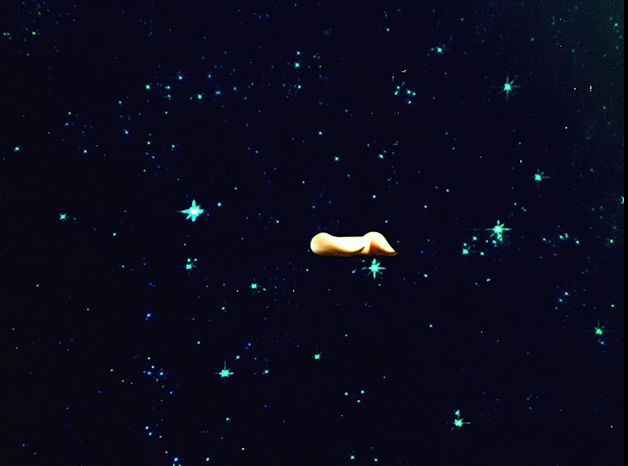
Space is the Place is a 1974 Afrofuturist (and Afropessimist!) film. Directed by John Coney, the film features Sun Ra (who uses Egyptian iconography and mythical references in his own work) and his Arkestra, following them to a new planet in outer space where the group decides to settle Black Americans. Sun Ra travels through time and challenges a character named the Overseer to a game of cards to decide the fate of the Black race.
Traveling back to the present, Sun Ra lands his spaceship in Oakland to spread word of the resettlement and gather recruits for his space colony (even establishing an “Outer Space Employment Agency” to offer them economic security in their new home). Of course, the Black youth in the city are skeptical of him. In one of my favorite scenes in all of film, Sun Ra, ignoring their riffing, explains to them that they are not real, that they’re myths:
“How do you know I’m real? I’m not real. I’m just like you. You don’t exist in this society. If you did, your people wouldn’t be seeking equal rights. You’re not real. If you were, you’d have some status among the nations of the world. So we’re both myths.”
Ultimately Sun Ra, after surviving a kidnapping and an assassination attempt by white NASA scientists, defeats the Overseer and “catches up” Black folks from across the city to join him and the Arkestra on his spaceship. The spaceship leaves Earth, and the planet is destroyed.
So if Black people aren’t “real”, what are we? If we are defined by “notness”, then we must be the support of the moral order and cohesion of all of modern society as Campbell described. Our nonexistence binds it all together, providing the mental relief and outlet for nonBlack people who, without it, could not readily identify their own selves. Perhaps it’s part of the reason why 2020 was such a bizarre, performative display of racial guilt and shame, and why everything politically and socially since then has felt like a resentful backlash.
But if nonBlack people increasingly rely on technology like genAI (informed by and trained on their fucked up biases and creating endless feedback loops and echo chambers of racist bots and “slop”), how will that affect their interactions with Black people in a 3D world that is increasingly isolated and antisocial? Of course, none of this is regulated (and it’s not as if regulation has ever been a true mitigator of harm anyway).
What about the implications on Black art and creativity, which have driven and shaped so much of the popular culture these same people engage with online and otherwise? At the time I write there is backlash on social media against Suno, an “AI music generator” trained on the work of Black artists without compensation or their consent. I don’t necessarily agree with those of us who insist that “seats at the table” will be enough to mitigate such harms. And these are just digital concerns. The extent of the environmental impacts have yet to be seen, and history has shown that poor Black communities are almost always impacted first, hardest, and most frequently.
I’ve written previously about the similarities between cryptids and Black people, and though my own personal feelings and philosophy are likely not shared amongst us at large (as I’m aware many of us are resentful of and reject the stereotype of the “magical” Negro), it’s something I’ve chosen to lean into. Seeking freedom in this liminal, fantastical place— because of the possibility that is afforded to us there that is denied us by nonBlack people everywhere else— it’s where I feel imagination (and thus the future… a future…) can exist and expand. It’s why I think Sun Ra chose to end his film with the explosion of the planet Earth, with his spaceship turned toward a vast, twinkling emptiness.
It’s after the end of the world. Don’t you know that yet?